Byron Hyter Music
Where rhythm kneels
and worship breathes
Music that carries the message of Christ through sound, culture, and spirit.
From reggae to country to global worship, this is more than music, this is ministry.
Blog
Stories, testimony, and untold chapters
The Take Over
The Untold Story of a Houston 90s Rap Group
Byron Hyter, “Axeman,” and the rise, fracture, and legacy of an underground movement
Before the music and ministry, there was a movement in Houston that was never fully documented.This is one of those stories.
Introduction: More Than What Was RecordedIn the 1990s, Houston’s hip-hop scene was alive with more than just chart-topping acts. While groups like the Geto Boys defined the city on a national level, a deeper movement thrived beneath the surface, built on cassette tapes, live performances, street promotion, and reputation.Among those shaping that underground culture was a group known as The Take Over.Their story was never formally documented, until now.
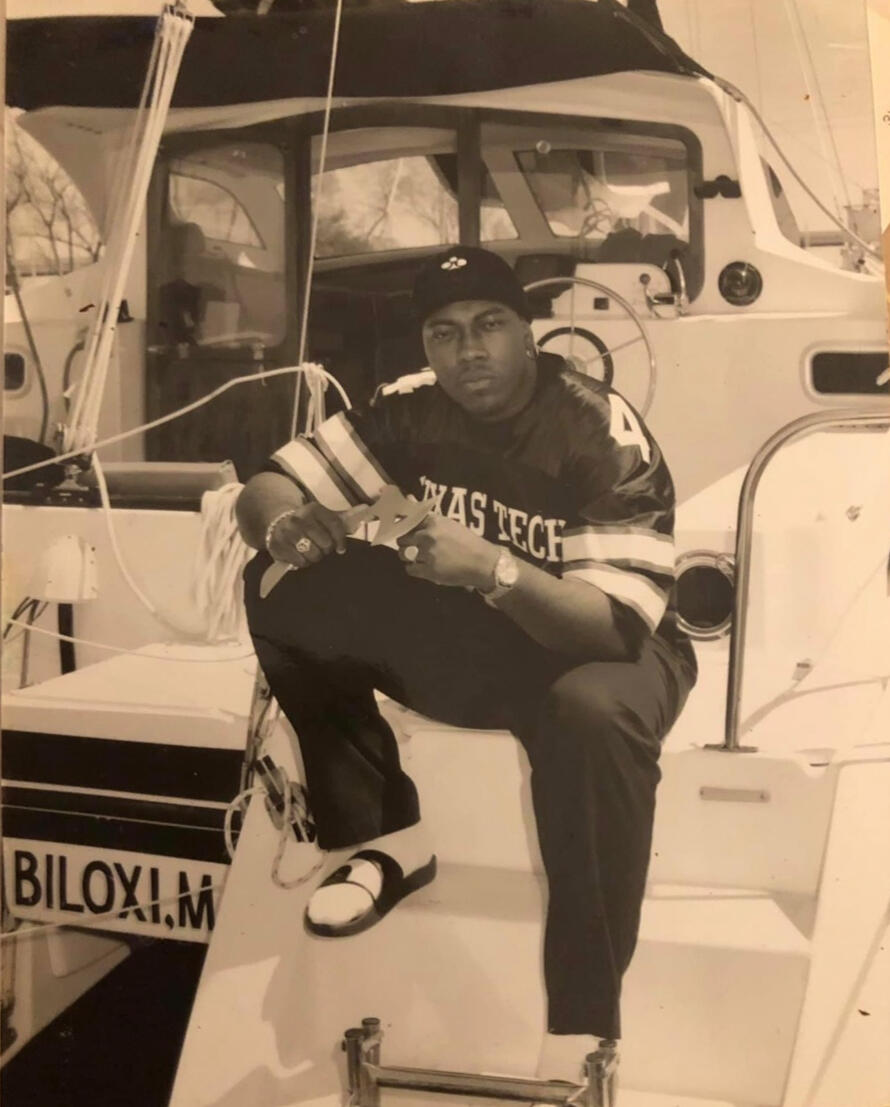
Early promotional photo of Byron Hyter, “Axeman,” during The Take Over era, Kemah, Texas.
Before The Take Over: The Man Behind the MovementBefore Byron Hyter stepped fully into the spotlight, he was already immersed in the business side of music. In the early 1990s, around 1992, while many aspiring artists focused solely on performance, Hyter was studying contracts, structure, and industry mechanics.A relative in California provided books on the legal side of the music business, giving him a foundation that most artists did not have.During this period, Hyter also operated under his middle name, O’Keith, through O’Keith Enterprises, where he provided informal management and guidance to emerging artists and local projects.His reputation for understanding both the creative and business sides of music extended beyond his immediate circle. At one point, he received a call from Mathew Knowles, who was in the process of developing and positioning talent in the Houston area.In that conversation, Hyter shared insight on industry networking opportunities, including events connected to the Young Black Programmers Coalition, YBPC, where radio professionals, artists, and industry figures gathered to build relationships and expand visibility.
Through those YBPC gatherings, Hyter was exposed to a wide range of industry talent and executives. He observed figures such as Brian McKnight and other emerging and established professionals navigating the business in real time.He also recalled Cassandra Mills, a record company executive connected to the legacy of Stephanie Mills, whose professionalism and command of the room left a lasting impression.Among the more personal connections was an encounter with Dielle Reed, a former classmate and vocalist who would go on to be part of the R&B group Jade. Seeing familiar faces stepping into national visibility reinforced the sense that those rooms were more than networking spaces, they were launching points.While many of the interactions were brief, the experience reflected the level of access Hyter was beginning to establish within the broader music ecosystem, long before mainstream recognition would come.
A House in the Studewood Area: Where the Scene ConnectedIn a house in the Studewood area of Houston, artists gathered regularly. The home, operated by DJ Blast, Archie Jackson, became a creative hub where rappers, producers, and musicians came together to exchange ideas and build sound.It was in this environment that Hyter expanded his network, sharpened his ear, and began to understand how different pieces of the music process came together in real time.More importantly, it was here that he met Clarence Lathan Jr., known at the time as Mr. C, who would later take on the name Mr. Sin.That introduction would become one of the most defining connections of the entire journey.
Ultimate Sound Studios: Access, Power, and RecognitionHyter’s presence in Houston’s music ecosystem expanded further through his connection to Ultimate Sound Studios, one of the more respected recording environments in the city at the time.Owned by Richard Simpson, a successful entrepreneur with interests that extended beyond music into the hair care industry, the studio was a fully realized operation. It combined professional recording spaces with a broader business infrastructure that few independent artists had access to.Simpson, along with his business partner Fad Wilson, recognized something in Hyter early. Rather than keeping him at a distance, they gave him access. He was allowed to move freely through sessions, observe different artists at work, and gain firsthand experience in how records were crafted, engineered, and finalized.This level of exposure elevated Hyter’s understanding of the industry. He was no longer just studying music from the outside, he was now inside the rooms where it was being created.

Richard Simpson, owner of Ultimate Sound Studios in Houston, Texas, whose studio provided a gateway into professional recording environments during a pivotal era in the city’s music scene.
RIPTHARUFFNECK and Junglistic Funk: Finding a VoiceBefore The Take Over fully took shape, Hyter was already developing his identity as an artist under the name RIPTHARUFFNECK, a name that reflected the aggressive, competitive energy of the era and his approach to lyrical dominance.During this phase, he began working on a project titled Junglistic Funk, a sound that blended elements of hip-hop with broader musical influences and experimentation.The project brought him into contact with respected musicians, including Eddie Guyton, who would later become the lead singer of the legendary group Lakeside. Their involvement added a level of musicality and depth that went beyond typical underground recordings of the time.Despite the creative momentum, Junglistic Funk never saw a full public release. Hyter made a conscious decision to pivot, recognizing that the next move required not just sound, but structure, identity, and a unified direction.
The Formation of The Take Over: Strategy Meets EnergyWith a foundation built through experience, relationships, and creative exploration, the next step was the formation of a group that could carry both vision and presence.The Take Over came together with Byron Hyter, known as Axeman, and Clarence Lathan Jr., known as Mr. C, at its core.While both brought ideas and ambition to the table, their approaches were different. Hyter leaned toward strategy, structure, and long-term thinking, while Clarence operated with intensity, instinct, and a more forceful, immediate style.That contrast created both synergy and tension. It pushed the group forward, but it also introduced challenges that would later define its trajectory.Together, they began building something that extended beyond music. It was branding, movement, and presence, rooted in the streets of Houston but aiming far beyond it.
Pirateville (1995): Hustle, Sacrifice, and the First ReleaseWith The Take Over now in motion, the next step was turning vision into something tangible. That meant recording, producing, and releasing music without the backing of a label or outside funding.The EP Pirateville, officially released in 1995, was built through determination, sacrifice, and creative hustle. Every aspect of the project required resources that were not readily available, forcing Hyter and Lathan to find ways to finance their progress.Final mixing and mastering took place at Digital Services Recording studios in Houston, a respected facility founded by engineer John Moran. At roughly one hundred dollars per hour, the sessions represented a serious financial commitment, pushing them to stretch every dollar they had.Beyond the music itself, branding decisions also became points of tension. From the visual direction of the cassette artwork to the way the project would be presented to the public, differences in opinion reflected deeper contrasts in approach.Still, the project moved forward. Pirateville was completed, duplicated, and put into the streets, marking the first official release from The Take Over.
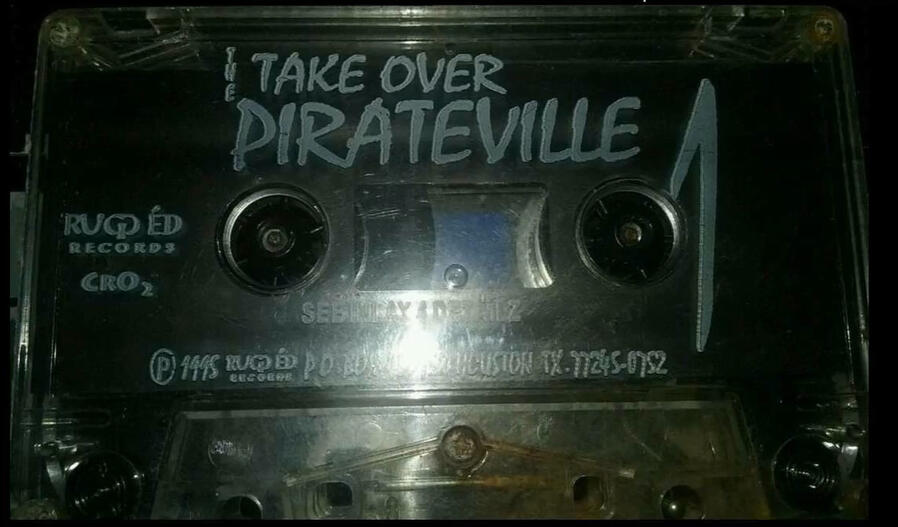
An original cassette copy of “Pirateville,” reflecting the independent distribution methods of The Takeover during the 1990s.
The Breakthrough Record: “Back To The Hood”
The defining record for The Take Over was officially titled “Back To The Hood,” but it became widely known by the hook that resonated across the city:“It’s all good up in my hood, I thought you knew player.”That line became the identity of the song and the phrase people remembered.The track was inspired in part by the Fifth Ward Boyz and the sound that was already shaping Houston’s identity. But what separated The Take Over was not just the music, it was the strategy behind how it was promoted.Hyter developed a grassroots approach, creating business cards with radio station numbers and encouraging listeners to call in and request the song. The response was stronger than expected.During a visit to Ultimate Sound Studios, Hyter crossed paths again with DJ Crazy C, also known as Simon Cullens. Having known him from years earlier, Hyter thanked him for supporting the record. Crazy C’s response revealed something bigger was happening.The station was receiving a high volume of calls requesting the song on a consistent basis. What seemed like simple promotion had turned into real demand across the city.That demand pushed the record into rotation on 97.9 The Box, eventually earning The Take Over a Top 20 position on the Mad Hatter show.At that moment, the group had gone from local movement to recognized presence in Houston’s music scene.
The Opportunity That Was Just Out of ReachAs momentum continued to build, The Take Over began exploring how far they could take the success of the record. The response from the city had proven that the music connected, and the group was gaining real visibility.At that stage, however, everything was still being done independently. There was no distribution deal, no financial backing, and no infrastructure to support a larger push.During this time, the group was approached by Michael “5000” Watts, one of the most influential DJs in Houston. His interest represented a potential turning point, an opportunity to move from local success into sustained radio presence.For independent artists, moments like that are rare. It meant the right people were paying attention.However, the financial requirements tied to that opportunity were beyond what the group could manage. Having already invested heavily into recording, mastering, and producing their initial release, resources were limited.The moment created both excitement and pressure. It showed how close The Take Over had come to another level, while also highlighting the realities of building without industry support.Even without taking that next step, the recognition itself carried weight. It confirmed that what they had built was real, and that it had reached the ears of those who mattered.
Pressure and Diverging PathsAs the group’s visibility increased, so did the pressure that came with it. More attention meant more decisions, more expectations, and more weight on every move.While both Hyter and Lathan were committed to pushing The Take Over forward, their approaches continued to differ. Hyter leaned toward structure, planning, and long-term positioning, while Lathan operated with intensity, instinct, and a more immediate, force-driven style.Both approaches had value, and at times they complemented each other. But as the stakes grew, those differences began to create friction.Disagreements that once felt manageable started to carry more weight. What had been a shared vision was now being shaped by two distinct perspectives on how to move forward.The same contrast that helped build the movement was now beginning to challenge its stability.
The Breaking PointAt a certain point, tension moved beyond creative differences and into something more serious.An incident occurred that shifted everything. What had once been a strong working relationship, built on trust and shared ambition, was suddenly placed under strain in a way that could not be ignored.In that moment, Hyter was faced with a reality that went beyond music, beyond business, and into personal safety. The dynamic between the two had changed.No physical harm came from the situation, but the impact was clear. Trust, once broken at that level, is difficult to restore.From that point forward, the question was no longer how to move The Take Over forward together, but whether continuing at all made sense.The answer, over time, became clear.
After The Take Over: Reinvention and Forward MovementFollowing the split, Hyter moved in a new direction, applying what he had learned to business and branding. He launched Big Face Ballers Gear, a clothing line that gained traction and created new opportunities beyond music.Through that venture, he connected with athletic figures such as Broderick Thomas, a former Dallas Cowboys player, which led to additional projects and visibility. Those connections opened doors to work tied to events and apparel associated with Gilbert Brown of the Green Bay Packers.During this same period, Hyter also connected with Orion Lumpkins, known in the industry as Lump, a Houston-based music executive recognized for his role in breaking records and building relationships across the Southern hip-hop circuit.After seeing the momentum behind the clothing line, Lump offered insight on expanding the brand into a broader lifestyle concept. While Hyter implemented parts of that guidance, he later reflected that fully committing to that direction could have taken the business even further.Even so, the experience reinforced an important truth. The ability to create, build, and move forward was not limited to one lane. It could be applied across industries, environments, and opportunities.
The Final EncounterYears later, Hyter and Lathan crossed paths again.The moment was brief but telling. What could have escalated into something unnecessary was quickly addressed, and the situation was diffused.There was no extended conversation, no attempt to revisit the past. Just a recognition of what had been and what no longer was.In that moment, there was an understanding that both had moved on in their own ways.After that, their paths separated for good.
Conclusion: What The Take Over Really WasThe Take Over was never just a rap group.It was ambition, brotherhood, pressure, and growth. It was a moment in time where vision met reality, where something built from the ground up found its way into the culture.It showed how far determination and creativity could take you, even without backing, structure, or industry support.It also showed the challenges that come with building something in real time. Different perspectives, different approaches, and different pressures can shape the outcome in ways that are not always predictable.In the end, The Take Over was not defined solely by how it ended, but by what it represented while it existed.And sometimes, knowing when to walk away is just as important as knowing how to build.
This account reflects my experience of that time. Others who were there may remember certain moments differently, but the impact of what was built remains the same. There were many others who contributed to the movement in ways both seen and unseen, and their presence is appreciated even if every name is not captured here.